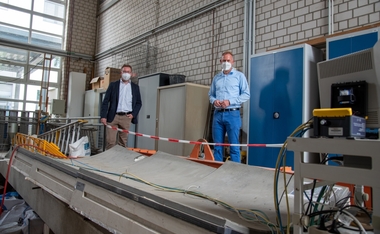
Enormous forces are at work during the construction of a tunnel. Heavy TBMs cut through the earth under the pressure of the thrust cylinders while assembling the segment lining. Dr. Ansgar Korte from...
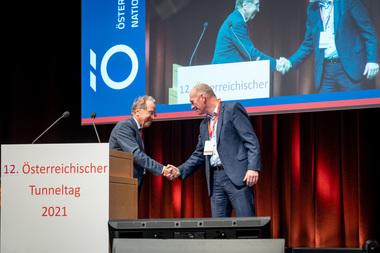
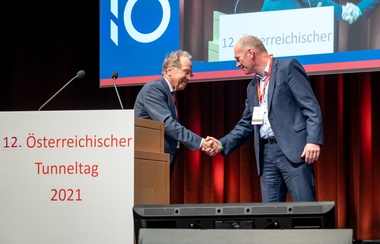
The 12th Austrian Tunnel Day could not be held in 2020 due to Covid 19. Therefore, the Austrian National Committee of ITA (ITA Austria) held the Tunnel Day as a hybrid event on October 13, 2021, at...
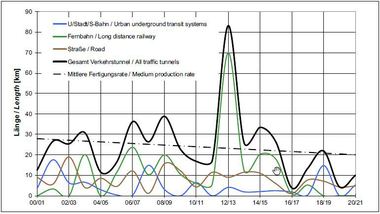
As in previous years, the STUVA also undertook a survey of current tunnelling projects in Germany at the turn of the year 2020/21. The outcome is compiled in tabular form for the month of December 2020 and subsequently assessed.
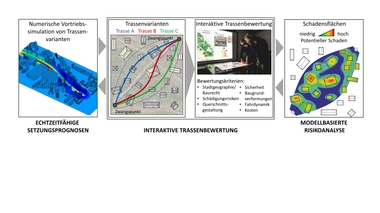
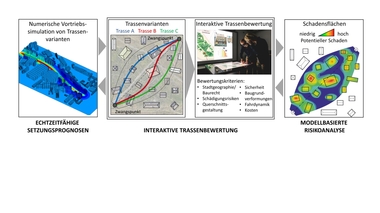
The development of a real-time interactive platform for digital exploration and evaluation of various tunnel alignments in urban areas provides a valuable tool during the planning process to support...
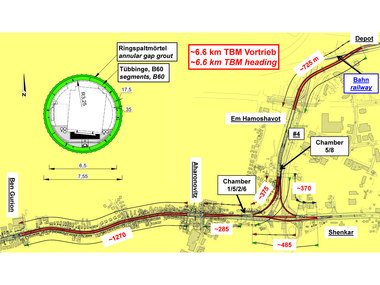
The complete backfilling of the annular gap between the excavation contour and the outer contour of the segmental ring with a suitable material is an essential element for supporting the rock mass,...
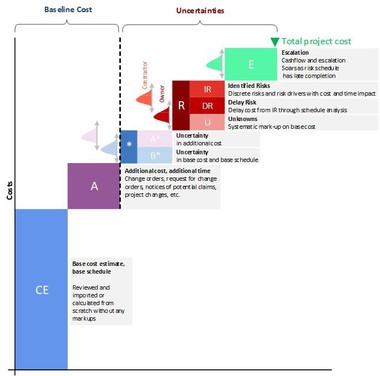
Major projects involve a high investment volume, a high degree of uncertainty, and long durations. In order to cope with this, the use of a digital project risk twin is advantageous, with which...
Sika has signed a definitive agreement to acquire MBCC Group, the former BASF Construction Chemicals, from an affiliate of Lone Star Funds, a global private equity firm, for a consideration of 5.2...
The development of a real-time interactive platform for digital exploration and evaluation of various tunnel alignments in urban areas provides a valuable tool during the planning process to support...
The 12th Austrian Tunnel Day could not be held in 2020 due to Covid 19. Therefore, the Austrian National Committee of ITA (ITA Austria) held the Tunnel Day as a hybrid event on October 13, 2021, at...
Enormous forces are at work during the construction of a tunnel. Heavy TBMs cut through the earth under the pressure of the thrust cylinders while assembling the segment lining. Dr. Ansgar Korte from...