Fixed Fire Fighting Systems for Road and Rail Tunnels
![Activation of FFFS in the commissioning test of M30 tunnels in Madrid, Spain [8]](https://www.tunnel-online.info/imgs/100839307_9710e46b0d.jpg)
![UPTUN R251 Engineering Guidance [1]](https://www.tunnel-online.info/imgs/100839306_5c7861e7d3.jpg)
![HGV (truck) fire prior to activation of water mist system [2]](https://www.tunnel-online.info/imgs/100839295_7f52a45bbc.jpg)
![Tarpaulin – covered HGV (truck) fire mock-up [13]](https://www.tunnel-online.info/imgs/100839282_02950ff11f.jpg)
![3D model of tunnel and section pipe design [8]](https://www.tunnel-online.info/imgs/100839279_d2d33b46b1.jpg)
![Full-scale fire tests (over 200 MW HRR before triggering FFFS) [8]](https://www.tunnel-online.info/imgs/100839297_1e7034b662.jpg)
![Commissioning the test of FFFS in the new Tyne Tunnel in February 2011 [8]](https://www.tunnel-online.info/imgs/100839269_66a415c6fd.jpg)
Today, fixed fire fighting systems (FFFS) are an established technology to improve safety in tunnels. The following article – a lecture at the STUVA Conference 2011 in Berlin - gives an overview of FFFS technology in general and also highlights requirements posed on operation, testing, design and installation. Additionally 2 case studies – the Eurotunnel and the Tyne Tunnels, – are described in this article.
1 Fixed Fire Fighting Systems (FFFS) in Tunnels
Fixed fire fighting systems (FFFS) are an active way of combating fires in tunnels (Fig. 1). They are a new method of improving fire safety compared to conventional technologies such as passive protection and ventilation. The approach using active fire fighting as a fixed installation has been employed for decades in Australia and Japan. The technology was selected in accordance with building protection rules; low-pressure deluge systems have been applied. The European approach has been to apply water mist fire fighting technology, which has been in commercial use for only 20 years, initially in marine applications and now in most applications. Water mist technology was first found to be extremely effective against tunnel fires within the UPTUN research project [1]. Later, it was shown in full-scale fire tests within the SOLIT and SOLIT2 research projects that high-pressure water mist technology is very effective against heavy goods vehicle fires in tunnels [2]. HGV fires are normally used as the design criterion since the aftermath of catastrophic fires has shown how severe they can be. High-pressure water mist systems have become a well-established technology based on European research programmes and a number of privately funded tests by different governmental institutes in Spain, the UK, France and Germany. High-pressure water mist systems have been used for tunnel fire protection in several European countries, including France, Spain, the UK, the Netherlands, Italy, Austria and Russia.
for FFFS
FFFS are normally installed to improve both life safety and asset protection. The general requirements for FFFS are listed in Table 1 [2, 3, and 4]. Depending on the technology applied, the above mentioned requirements can be met at different levels. Of all such systems, high-pressure water mist systems have been tested most frequently through-out the world and the described effects have been realised in hundreds of full-scale fire tests. Other technologies still require large quantities of test data to enable their overall effects to be resolved.
Standardisation of FFFS has developed very slowly. Let us not forget that PIARC was against active systems in tunnels just one decade ago [10]. False assumptions were later corrected by
PIARC, and a separate report about FFFS entitled “An assessment of fixed fire suppression systems” was published in 2008 [4]. However, the technical and commercial specifications given in this report are already somewhat outdated compared to the state-of-art systems being currently installed. NFPA502 is the first standard that included a chapter about FFFS in the latest edition, published in 2011 [3]. NFPA502 provides basic information and engineering requirements for the systems to be installed in tunnels. So far, the best engineering-based approach has been generated in the UPTUN research programme (Fig. 2). “Engineering guidance for water-based fire fighting systems for the protection of tunnels and subsurface facilities” sets basic engineering practices for systems to be installed in tunnels [1]. The French CETU also published a new report entitled “Water mist in road tunnels” as recently as 2010 [11]. The CETU report provides a comprehensive description of state-of-art technologies. Within the framework of the ongoing SOLIT2 research project, very extensive reports and engineering guidance is due to be published in the not too distant future.
It is a common misunderstanding, sometimes even falsely maintained by authorities, that modern FFFS have not undergone testing. In actual fact, FFFS technology is one of most extensively tested safety systems following the occurrence of several catastrophic fires in Europe 10 years ago. Technology has been tested both in research projects and privately funded full-scale fire tests. For example, Fogtec water mist technology has been tested in over 100 full-scale fire tests in test tunnels. Testing included UPTUN, SOLIT and SOLIT2 research programmes. The technology has also been tested for such governmental organisations as the UK Highways Agency and private tunnel operators, such as the Eurotunnel (Fig. 3).
The main reason why very extensive testing is carried out is that FFFS, in particular water mist systems, are a new technology with a design based on type testing, demonstrating the function of the system with commonly understood realistic major fires. This is different to many other safety systems, which are defined by descriptive standards but without testing requirements or are limited to scale or thermal tests or merely simulated.
The testing of FFFS must follow the risk analysis and expected design fire. There has been a lot of discussion about the appropriate design fire. The current understanding is that a heat release rate (HRR) of over 100 MW is required for a major fire scenario with HGVs [6, 12]. This HRR value was determined as an outcome of full-scale experimental tests and subsequent studies of real fires. This value has already been adopted by standards. For example, NFPA502-2011 defines a value of 70 to 200 MW HRR for trucks [3]. Modern FFFS systems have been tested full-scale with such scenarios in test tunnels. The tests are normally performed with a Class A truck mock-up reflecting the real case (Fig. 4). There are many details related to fire testing and mock-up design that only professional test organisations can cater for. Most of the tests were carried out at the Spanish tunnel test centre TST. A good example of a small detail affecting the behaviour of fire is tarpaulin. It has been noticed that covering the mock-up, as with real trucks, leads to a completely different fire development. Tarpaulin limits the access of water to the seat of the fire from the very beginning and fires first grow before being controlled by the water mist system [2].
The proper design of FFFS is a crucial element of real projects. FFFS have a large pipe network in tunnels and, as a consequence, installation is time-consuming. For this reason, piping for modern FFFS is designed using CAD in 3D and prefabricated to a large extent off-site (Fig. 5). This minimises the installation time required on-site. In addition, quality control is easier to perform when piping is executed at the factory by welding robots. Today, tunnels are often measured and modelled in 3D, especially in refurbishment projects. This ensures the accuracy of prefabricated piping kits for different tunnel geometries. Design rules for tunnel fire safety systems differ completely to those for other applications. A common misunderstanding is to use the same design criteria and components as, for example, are applied for normal building protection. The environmental conditions, stress/vibrations and necessary life time expectations vary considerably. UPTUN R251 Engineering Guidance provides the basic level of requirements for all water-based FFFS for tunnels [1]. However, many national codes, such as the German RABT, set even higher definitions for material requirements [14].
FFFS were previously designed and installed as add-on systems to improve fire safety in tunnels, together with other conventional technologies. Nowadays, FFFS have emerged to be among the critical elements of the tunnel safety system. This means that tunnel safety is fully dependent on FFFS in the event of a fire incident. This has made reliability engineering an important part of designing FFFS for tunnels. Often full RAMS (Reliability, Availability, Maintenance and Safety) studies have been carried out as part of the design process of FFFS. The design availability requirements for FFFS can be very high. For example, Fogtec has built systems for 99.98 % design availability for mechanical parts. Related control systems can even be SIL (Safety Integrity Level) certified. Although use of reliability engineering tools is common in the aviation, rail and automotive industries, it is completely new to tunnel or fire safety engineering, having been introduced only a few years ago.
Installation of FFFS in tunnels is also an important element from the system liability point of view. It could be that FFFS components (nozzle type, layout, etc.) have been type tested full-scale, but the installation of the system fails to meet sound engineering practice. This leaves considerable room for interpretation with regard to liability aspects. The commonly established practice is that the FFFS manufacturer also becomes involved in the installation. Sometimes the installation is carried out directly by the manufacturer or the manufacturer is responsible only for controlling the works.
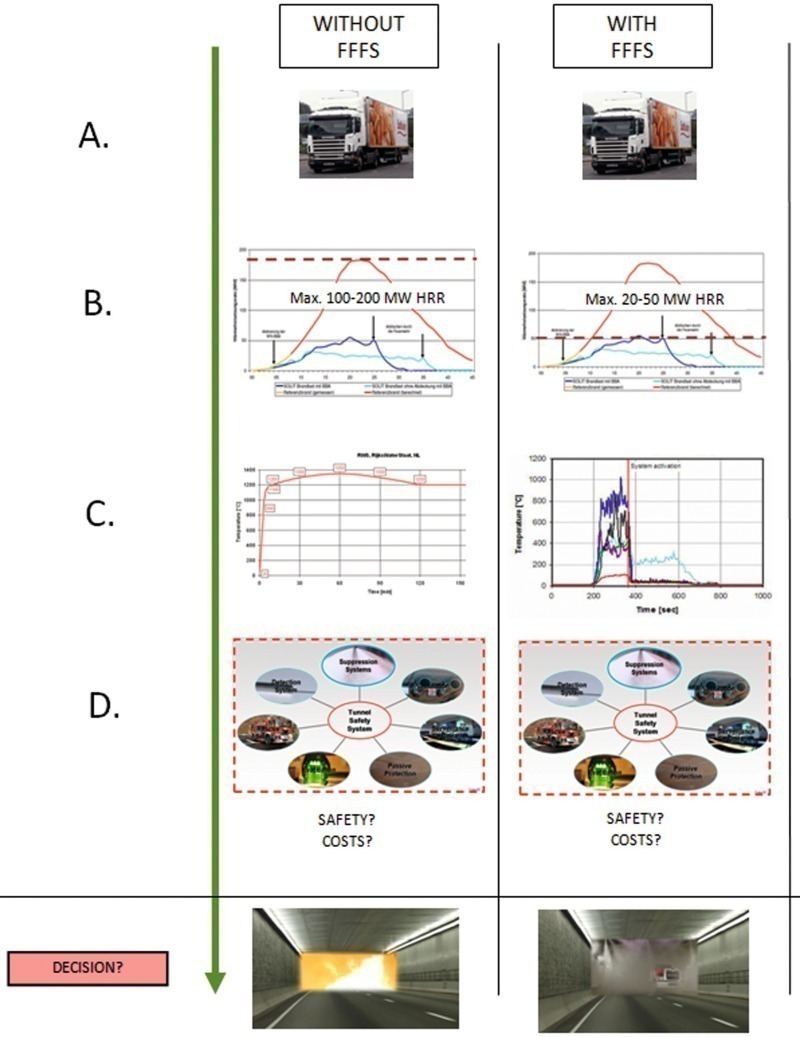
Investment decisions concerning FFFS always depend on the individual tunnel. Governing standards also recommend carrying out a full analysis prior to taking the investment decision. There is no standard process covering all countries, meaning that the risk analysis and related cost-benefit analysis will vary slightly depending on the country and organisation undertaking them. However, all of the studies can be simplified with the help of a few general process steps, shown in Fig. 6 (particularly with regard to the aspect of protecting the structure):
Step A: The first step is to evaluate the hazards/risks. This is strongly related to the traffic allowed in the tunnel. A major criterion is the type of vehicle travelling through the tunnel. The main decisive factors are often dangerous goods and HGVs.
Step B: The potential fire hazard is changed into the design fire in the next step. For example, HRR is typically compared with and without FFFS.
Step C: The design fire is changed yet again to design parameters such as temperature/time curve. Variation is high with and without FFFS for such values and give 2 completely different approaches.
Step D: In the final step, these absolute values are assessed with regard to the design of the tunnel safety concept. The assessment covers the concept with/without FFFS and describes the safety level achievable with both. The assessment also lists all of the pros and cons of both approaches. Once the concepts have been drawn up, the costs incurred are evaluated. This assessment normally takes into account the likeliness of different incidents as a function of tunnel type and usage. This furthermore leads to a complete cost-benefit analysis, which helps investors to decide whether or not the investment makes sense. Life cycle costs (LCC) are also included in the cost-benefit analysis.
The above-mentioned evaluation is usually carried out for a number of different safety aspects. Life safety, fire fighter safety and tunnel damage risks are typically evaluated separately. These evaluations often give quite different outputs, because FFFS provide much greater life safety and fire fighter safety because they are active fire fighting systems that are activated immediately. However, the commercial impact of these views is often irrelevant to decision making. There is also interaction between different safety aspects. Failing in one part may also lead to problems in others. For example, the fire tests have shown that heat radiation in fires over 50 to 100 MW without FFFS may be too high to approach and extinguish [12]. If fire services are unable to tackle a major fire, this could lead to a catastrophic fire spreading to several vehicles, causing severe damage to the tunnel structure.
When FFFS costs are analysed, LCC are also evaluated. LCC are often considered to be higher than in reality. This is mainly due to the experiences with the technology for which there is no specific design for tunnel applications. Technology has advanced in recent years and many innovations have been achieved. According to the standards, for example, the operation of the section/zone valve normally located at 20 to 30 m intervals in the tunnel needs to be checked on a monthly basis, or at least on a quarterly basis. This is very problematic in some tunnels, because it taxes service personnel and causes traffic interruptions. Today, however, valves exist that can perform this maintenance test fully automatically and remotely, significantly lowering maintenance costs. What is more, the materials used for modern FFFS are now of a very high quality and are highly resistant to corrosion, ensuring a very long life span. These aspects have also lowered LCC significantly. Typical investment costs for state-of-the-art FFFS technology in Europe vary between 0.5 and 2 million euros/km for a turnkey mechanical installation, depending on the tunnel length and cross-section. Correspondingly, annual maintenance costs vary between 0.3 and 1.25 % of the investment.
2 Case Studies
Two very different case studies are presented in this section. The Eurotunnel is a very special rail tunnel, whereas the Tyne Tunnels are typical high traffic density road tunnels. The investment decision in both cases was made on the basis of a cost-benefit analysis, which showed that the investment made sense, even from a commercial perspective. The impact of FFFS on tunnel fire safety is considerable in both cases.
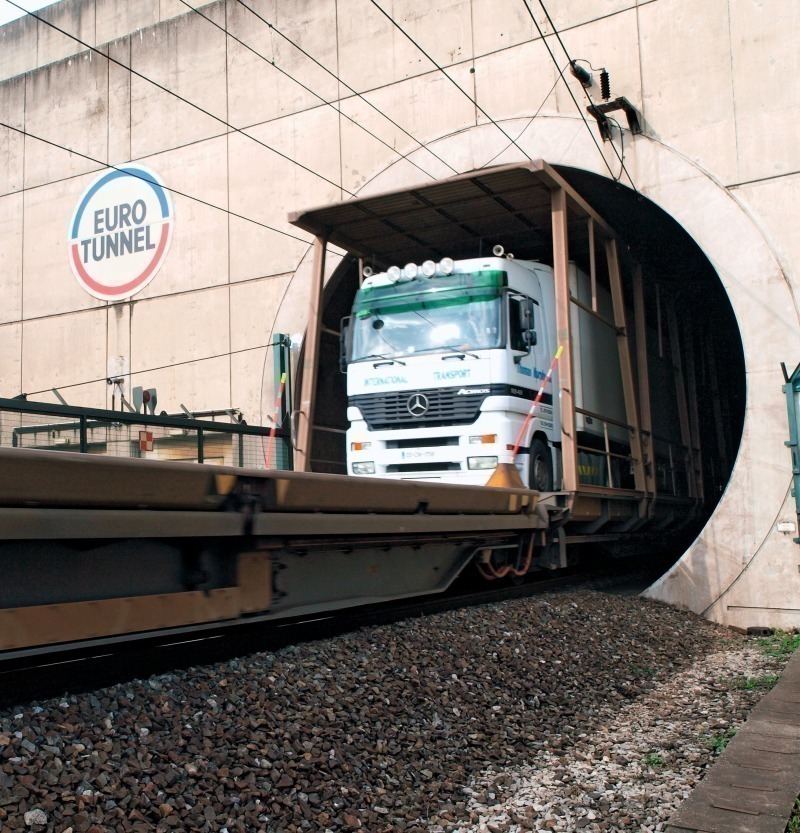
The Eurotunnel is the rail link under the Channel between Calais in France and Folkestone in England (Fig. 7). Up to 450 trains run through the tunnel‘s 2 tubes daily. These trains include the high-speed passenger train – the Eurostar – and car shuttles as well as freight trains and truck shuttles. Approximately 16 million passengers pass through the tunnel each year.
Following the severe truck fires on shuttles in 1996 and 2008, where luckily no one was injured due to existing high safety standards, the operating company decided to reinforce its safety strategy with a new SAFE (project name) fixed fire fighting system. The system is based on innovative high-pressure water mist technology that has already been tested in several research projects and installations in Europe. The investment decision favouring the “SAFE” project was based on the recommendation of an expert group that had carried out a quantitative risk assessment and cost-benefit analysis specifically for this project. According to this study, the potential savings generated by the fire fighting system are set to exceed the investment costs significantly [9].
The SAFE concept includes establishing FFFS in 4 sections of the Eurotunnel. Due to the significantly larger potential fire load in the truck shuttles, SAFE stations serve primarily to protect these truck shuttles. SAFE stations are located at the ends of interval 4 of both tunnel tubes, around 18 km from the portals. Each SAFE station is 870 m long and divided into 29 sections of 30 m length each. In the event of a fire, 3 sections are activated [9].
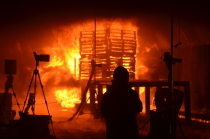
The Eurotunnel SAFE project is highly unique by many means. FFFS have been integrated as a crucial element of the overall safety concept. This means that several redundancies have been built into the system and extremely detailed RAMS studies conducted to maximise the design availability. Another challenge for the SAFE project was the full-scale fire test campaign, organised in April 2010. The design fire loads were created to present potential worst-case fire scenarios in the tunnel. Based on data of previous fires and simulations, these scenarios were executed by a group of experts. The tested fires were extremely large, with heat release rates in excess of 200 MW prior to activation of FFFS (Fig. 8). During vast test programmes in conjunction with experienced fire brigades, FFFS proved able to ease the rescue of persons by the fire brigade and enabled the fire to be controlled and rapidly extinguished even in the case of fully developed HGV fire loads with heat release rates from 100 to 200 MW. All general aims set for FFFS, as required by standards and reference guidance documents, were met. Additionally, detailed requirements placed on the Eurotunnel in terms of performance, e.g. temperature, fire spread, cooling, easing the pressure on fire services, were achieved and the Eurotunnel and its stakeholders were highly satisfied with the test results. For example, temperatures around the fire with 200 MW HRR were reduced from 1.100 °C to below 50 °C within 2 minutes after triggering the system, and fire was brought under control.
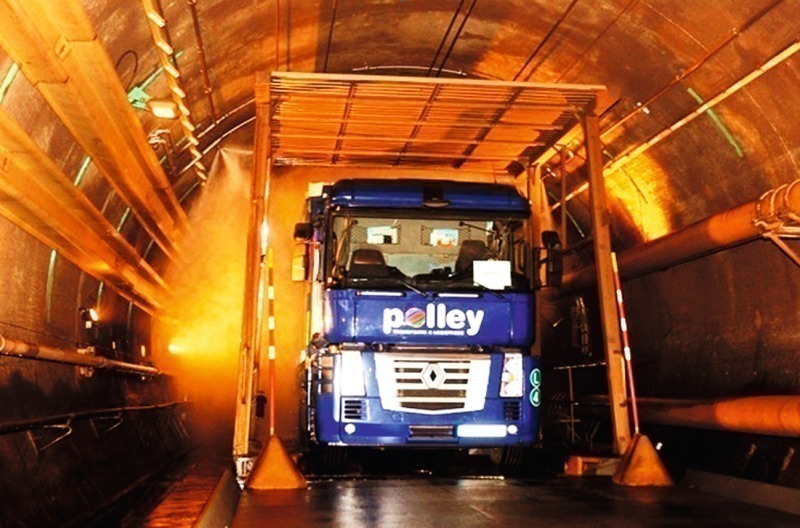
The first Eurotunnel SAFE system was installed in late 2010, and is operable. The total pumping capacity, including redundancy, is 4.000 l/min at 115 bar in one SAFE station. Installation in the Eurotunnel is very demanding due to the limited hours tunnels are accessible. A number of different test types have been carried out with the first SAFE system. For example, the water mist system was extensively tested together with powered 25 kV catenary, even if the power is cut off in a real incident. No negative or dangerous effects were determined in these tests. Additionally, tests with water mist distribution and ventilation as well as visibility and evacuation were carried out, and achieved very positive results (Fig. 9).
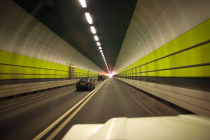
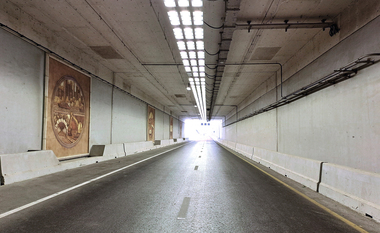
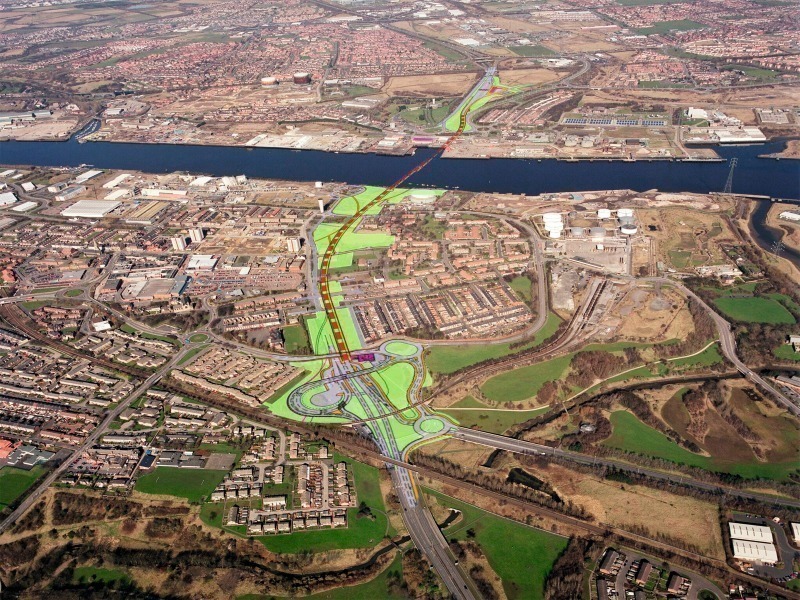
The Tyne Tunnels provide a crossing point under the River Tyne in Newcastle/UK. The existing road tunnel was opened in 1967; the new tunnel was completed in 2011. The tunnels are a vital part of the Tyne and Wear road network, carrying 38,000 vehicles per day; volumes are forecast to rise to 43,000 per day by 2021 (Fig. 10).
The decision to incorporate an FFFS, in particular a high-pressure water mist system, to protect the road tunnels of the New Tyne crossing makes this a pioneering project in applying the highest fire safety standards in the UK. The investment decision was taken based on a cost-benefit analysis. According to the independent study by experts, installation of the FFFS will provide benefit-to-cost over the assessment period of tunnel operation. Additionally, FFFS will increase the life safety of the tunnels and provide safety for fire services in the event of a fire.
The New Tyne crossing project includes protection of both, the existing and the new road tunnels with state-of-art water mist technology. The tunnels comprise 130 sections of 7 different cross-section types. The tunnels were also constructed using different methods, including cast iron lining, cut-and-cover, sprayed concrete lining and immersed parts. Three adjacent sections, each 25 m in length, will be triggered simultaneously in case of fire. Only deluge nozzles are used to provide full flow rates for every activated section, maximising the effect of water mist from activation. The total pump capacity of the water mist system is 3,300 l/min at 140 bar. After detailed analysis, the tunnel operator decided to activate the system immediately after detection. Human behaviour in the tunnel was tested on the basis of an accident test (Fig. 11).
The new Tyne Tunnels, which opened to traffic in February 2011, is the UK‘s newest tunnel. Thanks to FFFS and other state-of-the-art safety measures, the new Tyne Tunnel is considered to be the safest tunnel in the UK. The existing Tyne Tunnel is currently undergoing refurbishment and will reopen to traffic sometime between late 2011 and the beginning of 2012.
3 Conclusion
Fixed fire fighting systems (FFFS) have become an established technology to improve fire safety in tunnels. Earlier incorrect assumptions regarding the technology have changed over the past decade, due to the large number of full-scale fire tests performed. In fact, FFFS are probably the most extensively tested systems of all technologies installed in tunnels.
The aftermath of real fires and fire tests has increased our knowledge of normal major fires with HGVs. The heat release rate in such scenarios is considered to be over 100 MW. Although these HRR are very difficult to cope with, modern FFFS have even proven their effectiveness in such scenarios.
The protection targets for FFFS are to improve self-rescue conditions and access by fire services, and to prevent fire spread and limit damage to the tunnel. Before the investment decision is taken, a full risk analysis is carried out. Depending on each case, investments in FFFS can provide cost benefits. In some cases, investments are carried out purely on the basis of increasing life safety or the safety of fire services.
Two case studies were described in which FFFS are installed in 2 different tunnels. In both cases, the investment decision was primarily taken on the basis of cost-benefit analyses. Both tunnels exhibit the highest level of safety. The Eurotunnel SAFE project included full-scale testing in which even HRR developing in excess of 200 MW were brought under control using FFFS.