India

Chenani Nashri Tunnel Project:Breakthrough celebrated in July

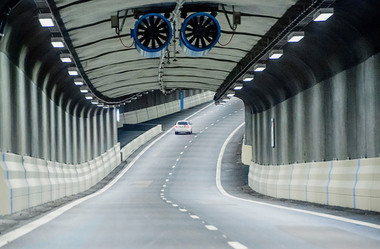
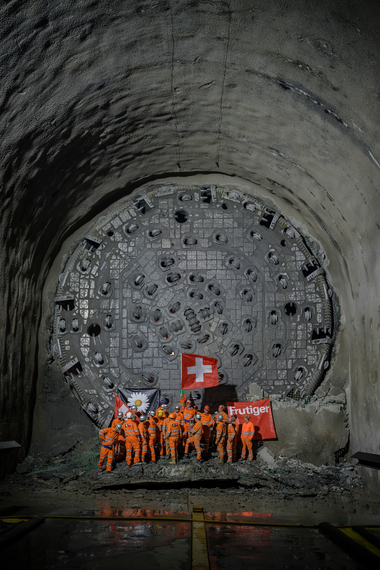
On July 13, 2015 IL & FS Transportation Networks Limited (ITNL) celebrated the breakthrough in the last section of India’s longest road tunnel between Chenani (South End) and Nashri (North End) in the state of Jammu and Kashmir. The Chenani Nashri Tunnel Project, a part of the ambitious 286 km long four-lane widening of the Jammu-Srinagar National Highway, will reduce the distance between the winter and summer capital cities of Jammu and Kashmir by nearly 30 km.

The Project involves design and construction of the 9 km long two-lane main tunnel with a parallel escape tunnel, as well as two minor...

Related articles:

Issue 03/2020 ABB Motion

Variable Frequency Drives for More Tunnel Safety and Energy Efficiency

Rail and road tunnels have to meet rigorous ventilation standards in terms of air quality and fire safety. Utilising variable frequency drives can help to ensure their maximum uptime and energy...

more
Issue 04/2026 Germany | Deutschland

ElbX: Tunnel Breakthrough at the Elbe Crossing

On 22 June 2026, the ElbX tunnel project commissioned by TenneT Germany celebrated the TBM-breakthrough. The tunnelling works, part of the large-scale SuedLink project, will connect Schleswig-Holstein...

more
Issue 06/2014 India

Systemair receives Breakthrough Order in India

Systemair has been selected by the DMRC (Delhi Metro Rail Corporation) as a supplier of tunnel fans and additional equipment to the extension of the subway in Delhi. The total order value amounts to...

more
Switzerland

TBM Breakthrough at Gotthard Road Tunnel

The secondo tubo consortium, consisting of partners Implenia and Frutiger, began tunnelling in February 2025 in Göschenen in the Swiss canton of Uri on behalf of the client, the Federal Roads Office...

more
Issue 05/2013 Switzerland

Roveredo Bypass: Tunnel Breakthrough

A 2-lane bi-directional tunnel is being built for the Roveredo Bypass – with shoulders at both sides and 2 lay-bys. It has up to 3,000 m overburden and runs north with 0.8 % gradient lying in an arc...

more