Digital Tunnel Twin as a “Common Thread” Throughout the Entire Life Cycle
Seequent, headquartered in Christchurch, New Zealand, was founded in 2003 and is a worldwide provider of geoscience software solutions. Seequent’s “Leapfrog Works” software enables dynamic 3D geological modelling, while “Plaxis” allows for three-dimensional finite element analysis. Manuel Aukenthaler is Segment Marketing Manager, Civil, at Seequent. In an interview with tunnel, he explained how both applications are used in conjunction with each other and can be integrated into a digital twin for the planning, construction, and operation of tunnels throughout their entire lifecycle.
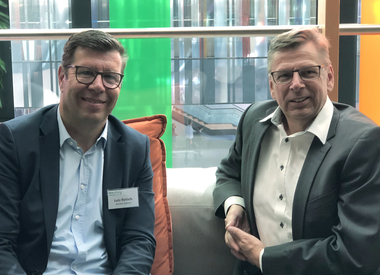
 In this interview, Manuel Aukenthaler of Seequent explains how 3D geological modelling and finite element analysis, in conjunction with a digital twin, are used in the planning, construction, and operation of tunnels throughout their entire life cycle
Credit/Quelle: Seequent
tunnel: Ground-related risks are considered the main causes of delays and cost overruns in tunnel projects. How exactly do Seequent’s solutions, such as “Plaxis” and “Leapfrog Works”, help engineers better manage these unpredictabilities of the subsurface?
Manuel Aukenthaler: In principle, our goal at Seequent is to turn uncertainty into knowledge. We want to enable engineers to understand the underground even before the first shovel hits the ground. This is exactly where our solutions come in. On the one hand, Leapfrog Works creates a dynamic 3D model of the subsurface. You can think of it as a precise map that reveals what lies hidden beneath the earth’s surface. On the other hand, we have Plaxis. This tool simulates the behaviour of soil and rock under load –exactly what happens during tunnel construction. And the combination of these two tools turns raw data into reliable predictions. This enables engineers to identify risks early on, run through various scenarios, and make quick, informed decisions.
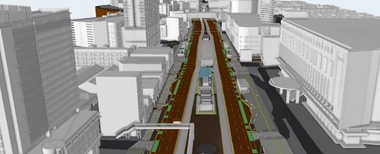
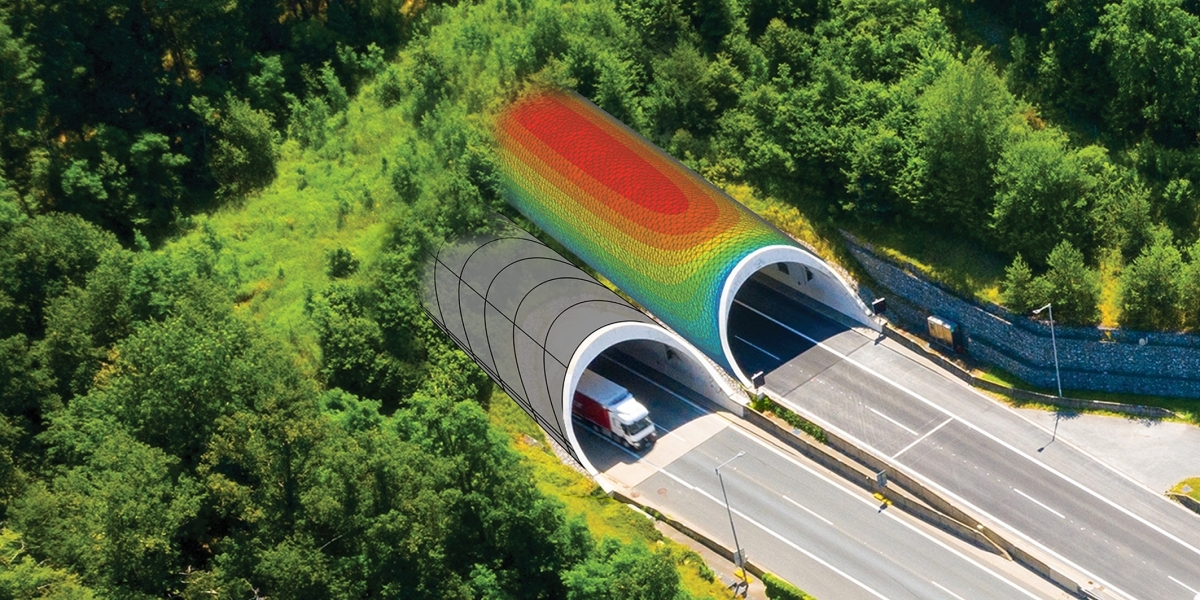 Geologists, geotechnical engineers, civil engineers, and others involved in a tunnel construction project no longer maintain their data separately; instead, they all truly work from the same data foundation
Credit/Quelle: Seequent/Bentley
tunnel: Can you give us a specific practical example where these tools have made a real difference?
Aukenthaler: A good example is the German Gelnhausen–Fulda rail project, where two-thirds of the route runs through tunnels: The engineering firm in charge was Prof. Quick und Kollegen from Darmstadt, who used Leapfrog Works and Plaxis to visualize and analyse the complex geological conditions, identify critical risks even before construction began, and optimize the planning. In the end, this saved a considerable amount of time and money.
“Changes become visible to everyone immediately, resulting in a seamless flow of information.”
tunnel: At Seequent and Bentley Systems, you speak of a “unified digital workflow that bridges the gap between geology and infrastructure design.” What does that mean specifically for the day-to-day collaboration between geotechnical and civil engineering teams? And what advantages does a digital twin offer over previous ways of working?
Aukenthaler: The goal is to provide a digital thread. Put simply: We’re replacing isolated data silos with a shared, constantly up-to-date database. Geologists, geotechnical engineers, civil engineers, and others involved in a tunnel construction project no longer maintain their data separately; instead, they all truly work from the same data foundation. This means we’re creating transparency and efficiency. The workflow looks like this: as outlined earlier, we use Leapfrog Works for modelling. So the geologist creates a detailed 3D ground model based on drilling data, measurements, and any other usable data. This model serves as the single source of truth for the ground model.
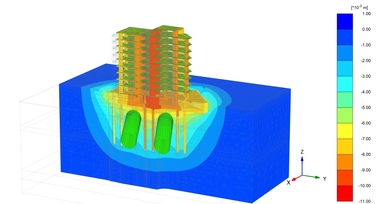
In the second step, the civil engineers import this geological model directly into design software – such as Bentley’s OpenTunnel Designer – and use it to design the digital BIM model of the tunnel: the excavation sequence, the support measures, the general alignment, and so on. In the third step, they can analyse how the ground behaves during this process. Through a direct and integrated workflow, this tunnel model – including the excavation sequence – is transferred from OpenTunnel Designer to Plaxis to realistically simulate the interaction between the structure – that is, the tunnel lining, the anchors, the support systems, and so on – and the ground.
The decisive advantage is the digital twin: For instance, through the Bentley iTwin platform, the model remains continuously synchronized via the OpenTunnel Designer and is available to all project participants. Changes become visible to everyone immediately, resulting in a seamless flow of information – that “digital thread” – which minimizes planning errors, promotes efficient collaboration, accelerates decision-making, and thus lays the foundation for sustainable infrastructure.
tunnel: How does a digital twin like Seequent and Bentley Systems’ support the long-term operation of tunnel facilities beyond the planning process and the construction phase? And what role does continuous monitoring play in this?
Aukenthaler: That’s a very good question – the digital twin’s role doesn’t end with the completion of construction. It is the key to safe and cost-effective operation throughout the entire lifecycle. One example of this is the Serravalle Tunnel in Italy. A digital inspection and maintenance system was developed there. Instead of time-consuming manual inspections, an intelligent, data-driven approach was adopted. Using laser scans and AI-powered defect detection, the tunnel’s condition is continuously monitored and mapped in a digital twin. The result: inspection times were reduced by 16%, field visits were cut by 60%, and operational risk was lowered by 70%. This example demonstrates how the digital twin becomes a dynamic, intelligent system. By integrating sensor data from this continuous monitoring – such as data on deformations or groundwater levels –risks can be identified early on, and maintenance can be planned proactively.