Second Element for the Fehmarnbelt Tunnel Successfully Immersed
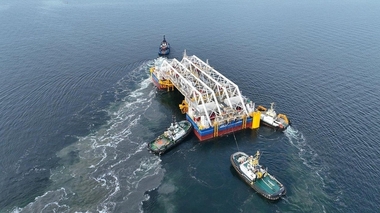
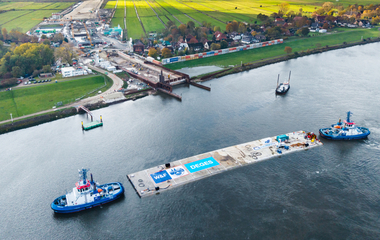
The second element for the Fehmarnbelt Tunnel has been installed on the seabed. Operations commenced on Tuesday evening, 23 June 2026, when the 73 500-tonne concrete element was towed out into the Fehmarnbelt. Five tugboats transported the element to the tunnel trench, where it was manoeuvred into position with pinpoint accuracy using steel wires. Immersion began during the night into Friday, and by Saturday morning the element was in place on the seabed.
 At the end of June 2026, the second element for the Fehmarnbelt Tunnel was installed on the seabed
Credit/Quelle: Femern A/S
While the first element was positioned at the tunnel portal, this latest installation had to be precisely connected to the previously immersed element from May. With two elements now in place, more than 500 metres of the 18-kilometre-long tunnel have been installed.
“A Complex Operation That Requires Full Attention Every Time”
“Although this is now the second time, we have immersed a tunnel element, it remains a complex operation that requires full attention every time. As the contractor gains more experience with the process and the equipment, we expect to increase the pace of the work,” says Lasse Vester, Deputy Project Director at Sund & Bælt.
In the following days, the sides of the element were covered with stone and gravel to ensure it remains firmly in place in the trench. Preparations will then begin for the installation of the next element.
A Total of 89 Concrete Elements
The Fehmarnbelt Tunnel will consist of a total of 89 concrete elements, which are being assembled at Northern Europe’s largest construction site at Rødbyhavn on Lolland. Each element is as large as a cargo vessel, and just like ships, Sund & Bælt has decided to give the elements individual names.
The Fehmarnbelt Fixed Link plays a central role in the important European Scan-Med transport corridor, which links Scandinavia with Central and Southern Europe. Each element will therefore be named after various towns, cities and regions along the north-south corridor within the European transport network (TEN-T), which extends all the way to the Mediterranean. This element has been named after the Swedish city of Lund.