The development company FinEst Bay Area Development in Helsinki intends to build a rail tunnel between the Estonian capital of Tallinn and the capital of Finland, Helsinki. FinEst Bay Area Development...
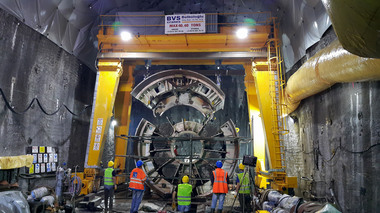
Start of Tunnelling Works at South Exploratory Tunnel On 29 March 2019 tunnelling work for the fourth drilling of Lot H51 Pfons–Brenner began on the south exploratory tunnel, marked by a drilling...
Cities are facing more challenges than ever before as growing populations put stress on transportation systems, social services, energy infrastructures and other vital aspects of daily life. If...
Excavation of Turkey’s longest water tunnel came to an end in December 2018. To get there, a 5.56 m diameter Robbins Crossover (XRE) TBM and the contractor JV of Kolin/Limak had to overcome dozens of...
In February 2019 the China Railway Engineering Equipment Group (CREG) and French multi-service vehicle (MSV) manufacturer Metalliance have announced a strategic partnership comprising a cooperation in...
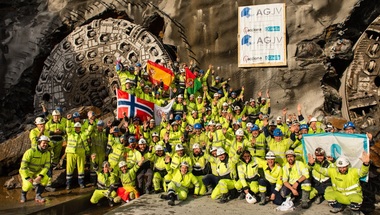
The final double breakthrough of the two Herrenknecht tunnel boring machines „Anna“ and „Magda“ (Double Shield TBM, Ø 9,900 mm) in the Norwegian Ski completed the excavation of both 20-kilometer-long...
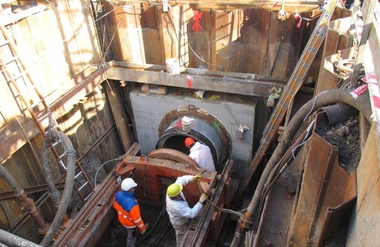
Special regulations have to be observed with regard to safe railway operation while carrying out work such as pipe-jacking or tunnelling under railway tracks. Towards this end, what is known as safetoring must be undertaken by means of a suitable measuring system and method. Safetoring is (deformation) monitoring with directly coupled measurement data evaluation so that the existing track position and the availability of the infrastructure can be assessed at any time, thus enabling direct intervention in the railway and construction activities should the limit or alarm values be exceeded.
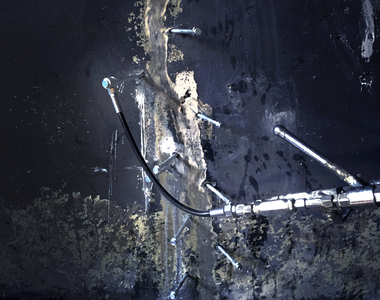
The German DIBt (technical institute serving the construction sector) has awarded TPH’s Rubbertite acrylate gel its certificate for complying with stability requirements on structural facilities in accordance with MVV TB, A 1.2.3.2 (DAfStb Guideline for the Repair of Concrete Components – October 2001) as one of the first repair products for concrete parts.
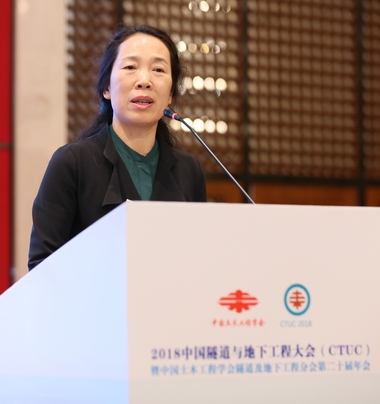
Professor Jinxiu (Jenny) Yan is currently the vice president of the ITA, vice president of the Chinese Tunnelling and Underground Works Society of CCES and deputy general manager of China Railway...