Tunnel and underground construction would not be possible without construction machinery. In confined spaces, these often highly specialized machines must carry out a closely coordinated sequence of...
With the construction of the Sisikon Tunnel as part of the Axen project, one of Central Switzerland’s most significant infrastructure developments is taking shape along the national road between Brunnen and Flüelen....
The Munich Tunnelling Symposium takes place every two years at the University of the Bundeswehr in Munich, Neubiberg. In 2024, the organisers were already delighted to welcome a remarkable 230 visitors. The ninth edition of this specialist event for tunnelling experts, held on 3 July 2026, broke the previous record by a considerable margin, attracting 280 participants.
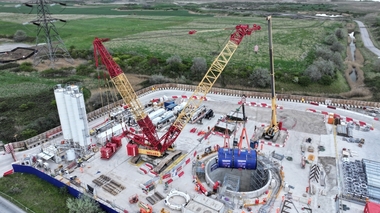
National Grid, the transmission system operator in England and Wales, is expanding its high-voltage grid as part of The Great Grid Upgrade. A key project is a 2200 m long cable tunnel under the Thames from Gravesend to Tilbury.
On 22 June 2026, the ElbX tunnel project commissioned by TenneT Germany celebrated the TBM-breakthrough. The tunnelling works, part of the large-scale SuedLink project, will connect Schleswig-Holstein and Lower Saxony over a distance of around 5.2 km. The Elbe crossing is one of the key sections of the power line, which will in future transport renewable energy from the north to the south of Germany.
With around 600 registered companies and more than 32 000 square metres of booked exhibition space, exhibitors from the Railway Infrastructure and Tunnel Construction sectors are seeing significant...
From 8 to 9 October, the 75th Geomechanics Colloquium of the Austrian Society for Geomechanics (ÖGG) will take place at the “Salzburg Congress” conference centre. This year’s colloquium is dedicated to Univ.-Prof. Dipl.-Ing. Dr. techn Gerhard Seeber (1925–2025), who has shaped generations of engineers in the field of power station construction. On Friday, 7 October, the 15th Austrian Tunnel Day will also be held at the Salzburg Congress Centre.
Green Light for Major Project in MunichIn September 2026, the project participants are christening the first tunnel boring machine for the 2nd core route in Munich. The Herrenknecht Mixshield (Ø 5040 ...
The numerous projects involving alliance models in Austria provide valuable insights into partnership-based project delivery in German-speaking countries. Of the current total of 15 infrastructure...
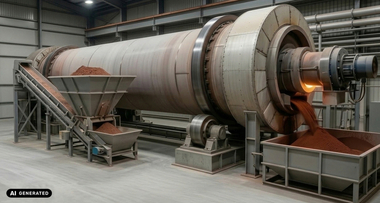
Every year, millions of tonnes of excavated material are generated during tunnelling and underground construction projects. To date, most of this material has been disposed of in landfill sites without further use. The interdisciplinary research project Geo-BAB is investigating how such clay mineral-rich materials can be transformed into a low-CO2 alternative to conventional cement through thermal treatment and chemical activation.