Lessons Learned From Austria
 Credit/Quelle: Markus Spiegl
 Credit/Quelle (2): Speigl, Friedinger, Sander
 Credit/Quelle: Speigl, Friedinger, Sander
The numerous projects involving alliance models in Austria provide valuable insights into partnership-based project delivery in German-speaking countries. Of the current total of 15 infrastructure projects – the authors of this article are involved in 13 of them – eight have
already been successfully completed. This article summarises these experiences into six Lessons Learned. These range from the selection of key personnel, through governance, the data foundation and the target cost process, risk allocation, incentive schemes and exit arrangements. Furthermore, key questions are outlined, the answers to which can contribute to successful project delivery.
1 Motivation and Background
In the past, cost overruns, delays and additional works were a common occurrence on major infrastructure projects in Austria as well. To address this, the Alliance Model was established in Austria. It was first used on the Mariastein construction lot of the Inn Joint Power Plant (GKI) [1].
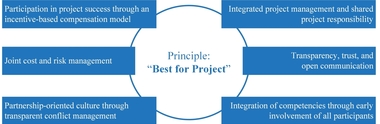
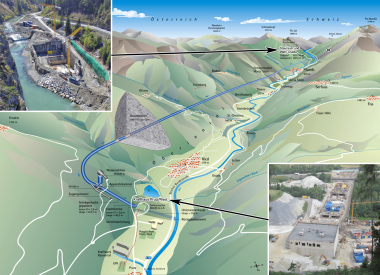
The model is now being applied in 13 further infrastructure projects [2]; Figure 1 shows one of them. Some of these projects have already been successfully completed. This raises the crucial question: what exactly makes these models effective, and which aspects are transferable?
Following on from the first part of this series, which presented the basic principles of the IPA and current applications in tunnelling [3], this second part summarises the practical experience gained in Austria into six Lessons Learned. The guiding principle is that an observation only becomes a lesson learnt if a concrete implication for selection, organisation, cost and risk management, or contract drafting can be derived from it.
2 The Austrian Alliance Contract:
Model and Empirical Basis
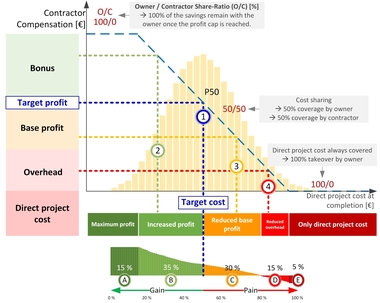
Building on the first alliance project in Austria, the GKI, a model was developed based on the provisions of the Rules of Procedure for Joint Venture Contracts (GO-ARGE) [2]. All models under the Federal Public Procurement Act (BVergG) are bilateral contractual relationships between the client and the contractor, which are procured through a multi-stage negotiation process. Remuneration is based on the Cost-Plus-Incentive-Fee (CPIF) principle: compensation of production cost plus surcharges plus a bonus-malus scheme, settled on an “open book” basis as a combination of verified actual cost and, to a lesser extent, allocation rates. The target cost comprises the base cost and a calculated opportunity
and risk budget (C&R). Together with the fee, these form the target price (see Fig. 2) [2].
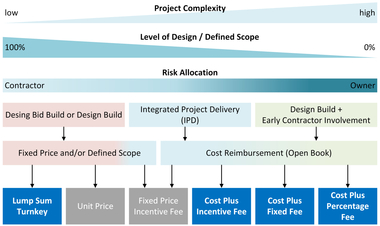
Procurement takes place under “reduced price competition”: the price criterion is weighted at only 40–60 per cent. This is a novelty for the first projects under the Public Procurement Act (BVergG) – and shifts throughout the process as the project matures (see Fig. 3). At the first stage of the procedure, there is generally no reliable target cost yet. Price competition therefore relies on the fee as well as on cost benchmarks and charging rates, for example for salaries
or equipment. It is only in the second stage, when the target cost is to be determined by the bidders, that this becomes the dominant price sub-criterion, whilst the cost indicators take a back seat. The highly weighted quality criteria, such as team compatibility, conflict management skills or understanding of contracts, are assessed through specialist questions, hypothetical tasks and diagnostic procedures led by business psychologists [2]. In parallel, the Austrian Construction Technology Association (öbv) published an initial information sheet entitled “Alternative Tendering and Contract Models” in 2021, an updated version of which was released in 2026 [4], and in 2026 published a separate information sheet on the “Infrastructure” alliance contract [5].
The empirical basis for this article comprises 13 of the 15 alliance projects at various stages of implementation; see Table 1. These observations are supplemented by experiences from German IPD projects [6].
A model similar to the “Infrastructure” alliance contract is also being applied in Bavaria, Germany. Under the name “IPA Compact”, the Bavarian State Ministry of Housing, Construction and Transport is trialling a partnership-based project delivery model in a pilot project (bridge construction). The project, supervised by the Landshut State Building Authority, involves the replacement and new construction of two bridges on the B 16 route across DB railway lines, including a temporary bypass with two temporary bridges. In addition, a new bridge on the St 2230 over the Hopfenbach near Kelheim is to be built. The contract will be awarded through a two-stage negotiated procedure preceded by a call for expressions of interest. Construction is scheduled for 2027 to 2028 [7]. The project delivery model was developed using the Progressive Partnership Agreement Framework [6].
3 Lessons Learned
3.1 “It Is Not the Contract That Brings
People Together; It Is the People
Themselves”
The benefits of early involvement do not stem from the conclusion of the contract, but from the quality and availability of the individuals actually carrying out the work. In Austrian procurement procedures, market interest was high, with bidders fielding their best teams; the suitability assessment of team compatibility, conflict management skills and understanding of the contract has proved its worth [2].
It follows that: key personnel must be named in the tender, committed to the project with a realistic scope of availability, and replaced only with equivalents; work samples should reflect typical decision-making situations in the project, such as changes in ground conditions or a disruption affecting the schedule in tunnel construction. The same requirement applies equally to the client. Without client representatives who have decision-making authority and are actually available, early integration remains one-sided and ineffective.
3.2 “Partnership Does Not Replace
Governance; It Requires a More
Precise Form of It”
Flat organisations and hierarchies must be defined with particular care. Unclear delegation of authority, overly stringent unanimity requirements and unregulated communication channels slow down decision-making. This is the opposite of what the IPA promises. Whilst the Austrian models benefit initially from the well-established committee structures of the GO-ARGE, defining the organisation and decision-making powers in German IPA projects proved to be challenging [2].
It follows that, before the project commences, a decision-making framework – including value and risk thresholds, schedules, and escalation procedures – must be established and validated on a scenario-based basis. For example: Who decides on a change to the tunnelling method, and at what level is a potential milestone delay addressed?
3.3 “Transparency Begins With the
Glossary, Not Just With the Target
Cost Determination”
Many conflicts do not arise from differing interests, but from differing terminology and data sets; for example, regarding the understanding and distinction between base cost, C&R, production cost, additional cost, target cost and target price, (see Fig. 2) [3].
It follows that, at the start of the project, a binding glossary and a project, cost, schedule and risk structure that remains consistent throughout all phases must be established. Otherwise, target cost will be calculated at a different level to that at which actual costs are settled. In this context, “open books” does not mean unlimited access to data, but rather pre-agreed rules regarding eligible costs, supporting evidence and audits. It should be taken into account that billing rates reduce the audit workload but carry the risk of over- or under-recovery or cost shifting. Their targeted use is essential [5].
3.4 “Target Cost Is a Process,
Not a Price Tag”
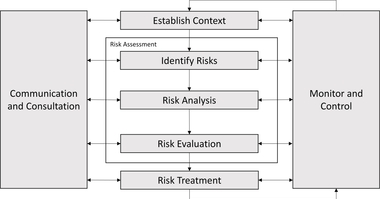
The quality of the target cost determines whether the incentive mechanism is perceived as fair and effective in steering the project. It is derived from a traceable base cost estimate, an opportunity and risk budget, and a robust schedule [8]. In tunnel construction in particular, many risks initially affect the construction period and only subsequently impact the budget via time-dependent costs. An integrated, probabilistic cost-schedule-risk model is therefore advantageous [4].
It follows that target cost must be validated on an ongoing basis, whilst strictly distinguishing between three causes of change:
1) improved knowledge whilst the construction scope remains unchanged,
2) genuine changes to the scope of works (e.g. the client expanding the project beyond the scope of works) and
3) the realisation of opportunities or risks that have already been factored into the price.
Only in this way can the target cost benchmark remain transparent. For a stable reference point with regulated updates, bar a few exceptional cases (see Chapter 3.5 below), is neither rigid nor arbitrary.
3.5 “Joint Does Not Mean Unlimited, and Simple Beats Complex”
The largely joint allocation of risk has proved its worth in Austria. Reports indicate hardly any “claims activity” in the sense of target cost adjustments, numerous optimisations, reduced project management effort on both sides, and a daily joint effort to pull in the same direction [8]. The spare capacity is channelled into managing incidents rather than assigning responsibility for them. This captures the typical driving force behind claims in traditional models – the ground conditions. However, ‘joint’ does not necessarily mean ‘unlimited’. Risks that only one party can influence, grossly negligent behaviour and defined extreme cases require clear regulations. The decisive factor is who has the information and can implement measures in the most cost-effective way.
The same principle of simplicity applies to the incentive scheme: the core focus is on the ‘cost’ target area; other target areas must be limited to a few objectively measurable indicators that can actually be influenced, with an appropriate baseline [9].
3.6 “It Is by Defining the Exit Terms That a Partnership Becomes Resilient”
Tender documents, target cost and risk management processes, and team selection generate early transaction costs that are not immediately apparent in conventional procurement [6].
It follows that: reusable contract modules, standardised cost terminology and a potential shortening of the
negotiation process limit the learning costs. In the spirit of “keep it short and simple”, a uniform standard for alliance models should be established in the long term [2]. At the same time, the “interim phase” requires defined decision-making stages: before the transition to the implementation phase, governance, the target cost basis, risk allocation and the settlement system must be robust. A feasible exit scenario in the event of failure is essential.
4 Consequences for Tunnel
Construction Projects
Before embarking on a partnership-based tunnel project, six questions in particular should be answered:
1) Key personnel: Have the personnel required for planning, construction methods, ground conditions, the schedule, cost and operations been selected, are they authorised to make decisions, and are they actually available?
2) Governance: Has it been established who makes decisions at what level and within what timeframe for typical technical, financial and scheduling decisions?
3) Shared data basis: Do all parties involved use the same project, cost, schedule and risk structure, and are “open-book” rules consistently applied from cost estimation through to final settlement?
4) Target cost maturity: Are base cost, opportunities and risks, price trends and schedule-related costs reported separately and validated in an integrated manner?
5) Risk allocation and incentives: Are the key risks managed according to their controllability, and is the incentive system limited to a few measurable, project-relevant targets?
6) Implementation and exit readiness: Are the prerequisites for the transition to the construction phase defined, and is there a viable solution in the event that these are not met?
These questions should be understood as a system.
A strong incentive model cannot compensate for unclear governance. “Open Book” cannot create robust transparency without a shared cost structure. A joint allocation of risks remains ineffective if the individuals involved lack decision-making authority. The robustness of the project delivery model therefore stems from the consistency of its modules and not from the adoption of a standard model in as complete a form as possible.
5 Results and Outlook
The results of the Austrian alliance models are encouraging. All projects implemented as “Infrastructure” alliance contracts in full compliance with public procurement law are, according to final accounts or current forecasts, largely below the agreed target cost and ahead of
schedule. To date, no project has failed. Reports also highlight realised optimisations, in some cases earlier completion dates, virtually no claims or counter-claims, and reduced project management effort on both sides. The perception of a more constructive working environment is also evident in several projects.
This does not yet constitute proof of superiority. A controlled comparison group of reference projects carried out conventionally is not available. Whether the target cost is met or exceeded also depends on the quality of the initial cost estimation. Nevertheless, it is reasonable to assume that the alliance model will continue to gain a foothold in Austria.
In practice, the following applies: partnership-based project management realises its potential not through the contract designation, but through a consistent system comprising people, governance, a data foundation, target cost, risk allocation and incentives. The Austrian alliance models, which have been deliberately kept simple, demonstrate that this system works even without a multi-party contract. They therefore offer considerable potential, particularly for the large number of medium-sized, moderately complex projects in Germany, to bring CPIF remuneration and open-book practices into widespread use.
Further articles in this series will address the application of the Progressive Partnering Contract Framework (PPF). The PPF serves as a tool for clients to systematically and objectively develop a suitable project delivery model. In addition, individual modules of the PPF as well as various project delivery models from the IPA will be presented.
This publication of the research project DigiPeC is funded by dtec.bw – Digitalization and Technology Research Center of the Bundeswehr; dtec.bw is funded by the European Union – NextGenerationEU.
Diese Veröffentlichung des Forschungsprojekts DigiPeC wird von dtec.bw – Zentrum für Digitalisierungs- und Technologieforschung der Bundeswehr – finanziert; dtec.bw wird von der Europäischen Union – NextGenerationEU – finanziert.